
lecture series
history of american architecture: BEAUTY REVISITED
Tuesdays, January 13 through February 10, 2026
Virtual | 12:00pm-1:15pm EST
Virtual and In-Person | 6:30pm-7:45pm EST
In-Person at Cranbrook Art Museum de Salle Auditorium
Lecturer: Kevin Adkisson, Curator, Cranbrook Center for Collections and Research
$85 for Adults; $25 for Full-Time Students with ID
Free for Cranbrook Students (email center@cranbrook.edu)
Advance registration is required (fee includes all five lectures).
This lecture series is eligible for American Institute of Architects Continuing Education Credits (AIA/CES).
Presented by Cranbrook Center for Collections and Research
Join Kevin Adkisson for the ninth installment of the Center’s popular History of American Architecture lecture series, this year focused on beauty as a force that attracts, unsettles, and persists across time.
About the Lecture Series
Cranbrook is exceptionally beautiful, and that beauty is not accidental. Beauty in architecture is the result of hundreds of intelligent, intentional decisions. Yet over the course of the twentieth century, as modernism reshaped the discipline, the word “beauty” itself came to be treated by many architects with suspicion—dismissed as subjective, nostalgic, or insufficiently rigorous.
In History of American Architecture: Beauty Revisited, Kevin Adkisson examines what was gained—and lost—when architects distanced themselves from beauty as an explicit goal. Across five lectures, the series considers beauty as something intentionally made, incidentally discovered, or actively resisted, alongside other elusive architectural qualities such as charm, delight, humor, and ease. These traits are difficult to define and impossible to measure, yet they often determine whether buildings are cherished and cared for—or merely tolerated.
Beauty is not a matter of taste alone. It is part aesthetic reaction and part cultural judgement, and beauty is designed, negotiated, revised, and maintained differently over time. Architects did not abandon beauty because it was frivolous, but because it proved difficult to defend within a profession increasingly oriented toward objectivity, efficiency, and metrics. This tension—between beauty’s persistence and its professional exile—forms the core of the series.
Each lecture begins with a close observation of a design detail from the Cranbrook campus, then expands outward to architects, buildings, and ideas from across the United States and abroad. Moving between familiar works and lesser-known examples, the series explores how architecture communicates, how judgment shapes pleasure, and why beauty—however contested—remains urgently needed today.
Week One
What happens when beauty becomes embarrassing? This lecture explores how architecture gradually distanced itself from beauty, charm, and pleasure in pursuit of theory and objectivity. Tracing this shift from the nineteenth century into the early modern era, it considers how changing professional values reshaped architectural language—and how that transformation widened the gap between architects and the people who inhabit their work.
Week Two
Why do some buildings feel generous, rich, or satisfying even when they are restrained, while others feel awkward or disconcerting despite lavish effort and expense? This lecture examines how architectural materials shape experience through qualities such as color, weight, texture, scale, and finish. Returning to—and gently testing—Louis Sullivan’s dictum that “form follows function,” the lecture considers how materials have been used to produce beauty and delight, and how those effects are shaped over time by judgment, ideology, and changing tastes.
Week Three
Few ideas have shaped modern architecture more forcefully than the rejection of ornament. This lecture revisits the debate crystallized by Adolf Loos’s 1908 essay Ornament and Crime, reconsidering ornament not as excess, but as a form of architectural communication. Across cultures and periods, ornament has carried memory, meaning, labor, and pleasure. By tracing how and why ornament was marginalized in the twentieth century, the lecture asks what was lost when buildings were stripped of their expressive vocabulary—and how architects have continued to grapple with ornament’s persistence.
Week Four
Architecture is not only seen, it is felt. Drawing inspiration from the 1966 classic by Charles W. Moore and Kent C. Bloomer, Body, Memory, and Architecture, the lecture explores beauty as an embodied experience. Approaches, thresholds, paths, and pauses all shape how architecture is remembered and understood. By examining architecture as choreography rather than image, the lecture considers how beauty is constructed through anticipation, repetition, and recall—and why some environments linger in memory long after we leave them.
Week Five
Beauty is never neutral. This lecture examines how judgments of beauty intersect with class, authority, and cultural power. Who decides what is beautiful? Who benefits from those decisions? By tracing how taste has been shaped, enforced, and contested, the lecture considers beauty in architecture as a social force—capable not only of persuasion and attachment, but also exclusion and resistance.
ABOUT KEVIN ADKISSON
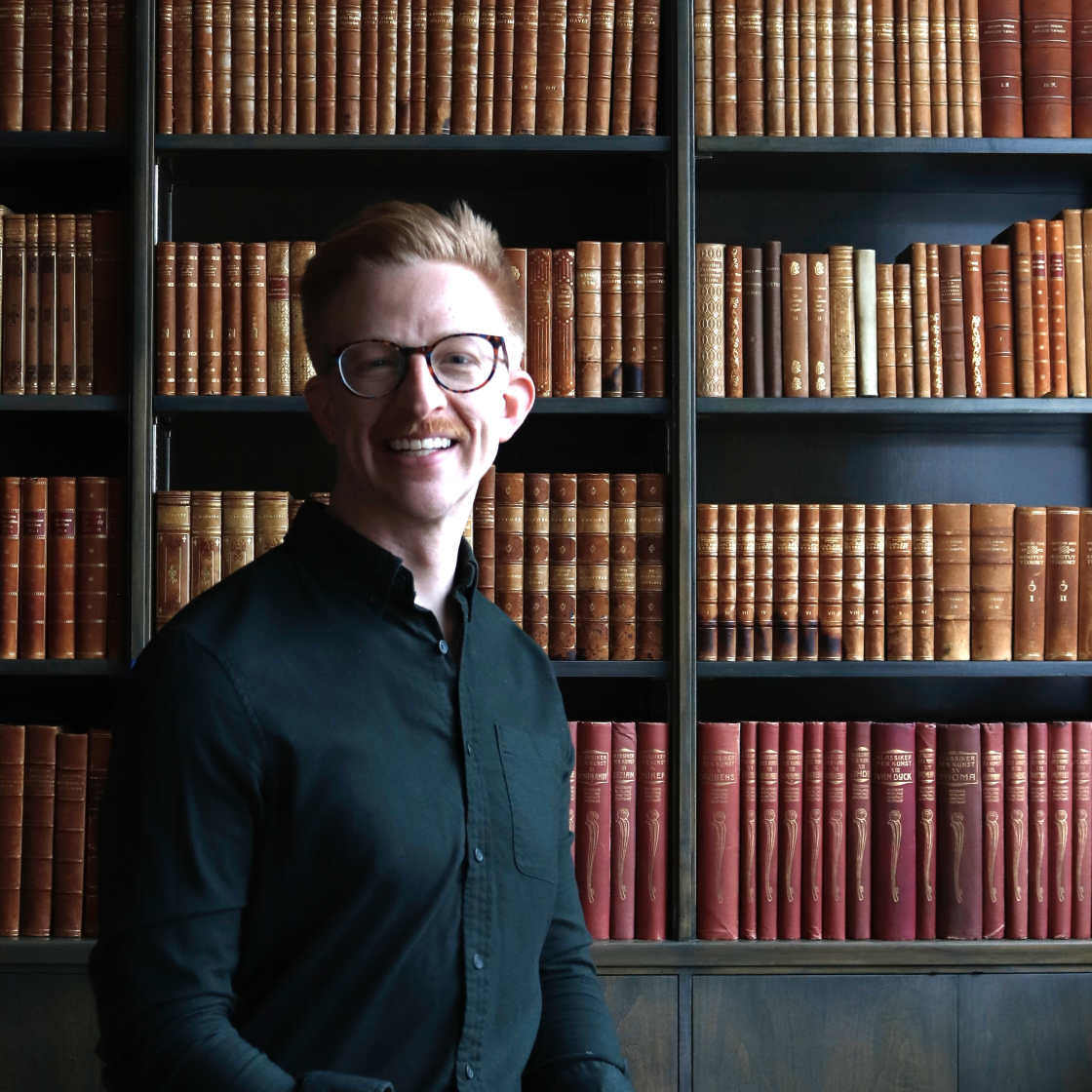
Curator Kevin Adkisson works on preservation, interpretation, and programming across the many buildings and collections of Cranbrook. Since arriving as a Collections Fellow in 2016, he has welcomed thousands of visitors to Cranbrook’s National Historic Landmark campus, both in person and virtually, bringing architectural history to life with clarity, humor, and enthusiasm. He has delivered the History of American Architecture Lecture Series since 2018.
Kevin earned his BA in Architecture from Yale University, where he worked in the Yale University Art Gallery’s Garvan Furniture Study. He received his MA from the University of Delaware’s Winterthur Program in American Material Culture, completing a thesis on postmodernism and shopping mall architecture.
Prior to joining Cranbrook, Kevin worked as a research and writing associate for the late Robert A.M. Stern in New York, contributing to design research and image development as well as Stern’s books Paradise Planned: The Garden Suburb and the Modern City (2013) and Pedagogy and Place: 100 Years of Architecture Education at Yale (2016). Kevin also worked at Kent Bloomer Studio in New Haven, Connecticut, on the study, design, and fabrication of architectural ornament.
ADDITIONAL INFORMATION
The seventy-five minute lectures will begin promptly at their scheduled times and will be followed by a ten-minute Q&A session.
This lecture series is eligible for American Institute of Architects Continuing Education credits (AIA/CES). The lecture series is only eligible for Elective credits, not Health, Safety, and Welfare units. Each lecture is one Learning Unit (LU), for a total of five LUs for Elective credits. AIA members must log into aia.org to self-report their education. Paper forms are not accepted or used by AIA/CES. Please call your local AIA chapter for more information.
For additional information in advance of the lecture, please email center@cranbrook.edu or call the Center at 248.645.3307.
INFORMATION FOR VIRTUAL ATTENDEES
On the Friday prior to the lecture date, registered participants will receive an email with instructions on how to join this virtual experience. We are limited to the number of virtual attendees and each registration is unique. As a ticketed series, please do not share the login link with others.
We appreciate your support of the Center by purchasing tickets for each viewer in your household.
INFORMATION FOR IN-PERSON ATTENDEES
Cranbrook Art Museum is accessed through Cranbrook's main entrance at 39221 Woodward Avenue. Free parking is available on the east side of the Art Museum and in the parking deck located midway between Cranbrook Art Museum and Cranbrook Institute of Science. Attendees that would like access to the Art Museum's barrier-free entrance (through the New Studios Building) will need to make advance arrangements with the Center the week before each lecture by emailing center@cranbrook.edu.
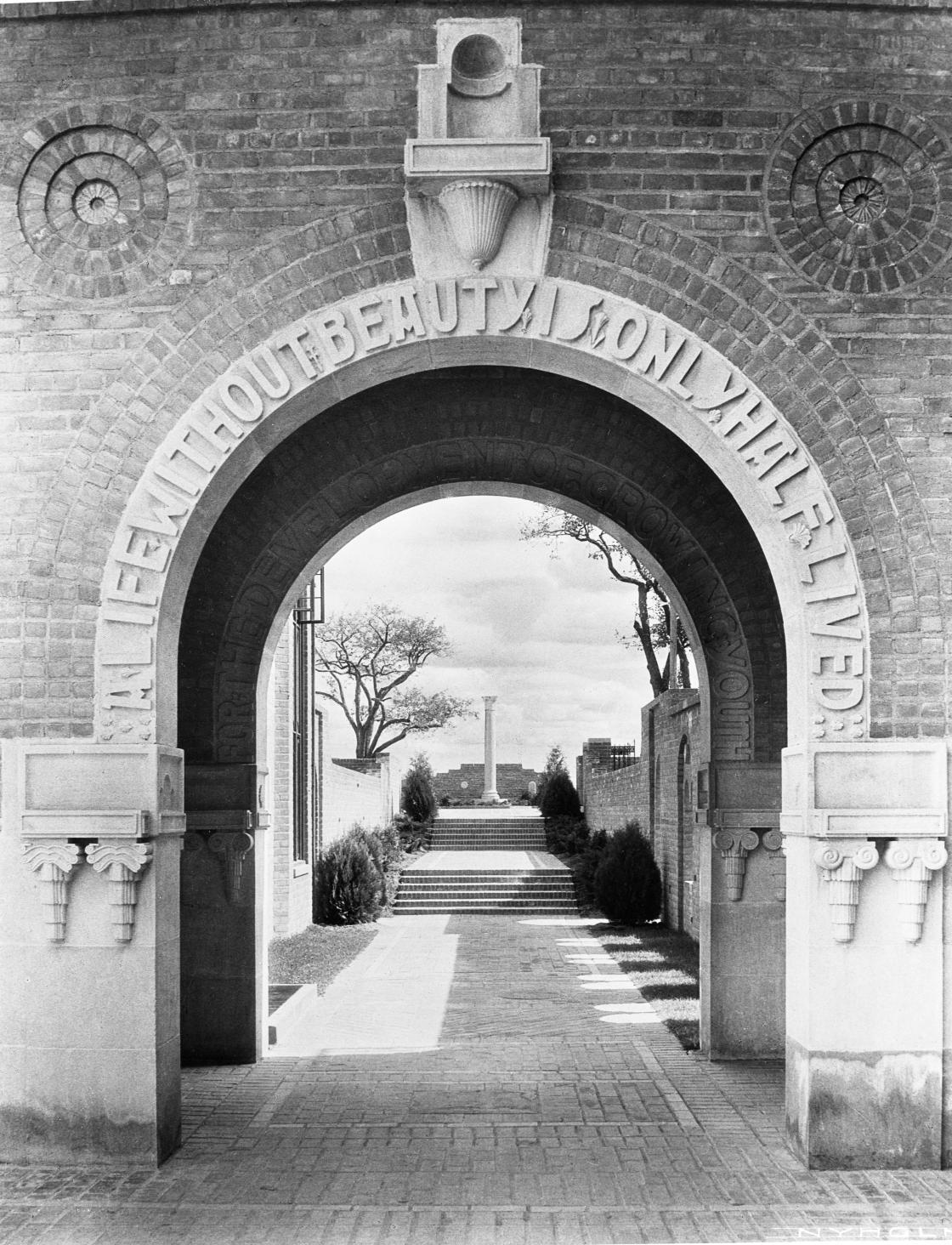
PHOTO CREDITS
Banner Image: Door detail, Kimbell Art Museum, Louis I. Kahn, Fort Worth, TX, 1966–1972. Courtesy Kimbell Art Museum.
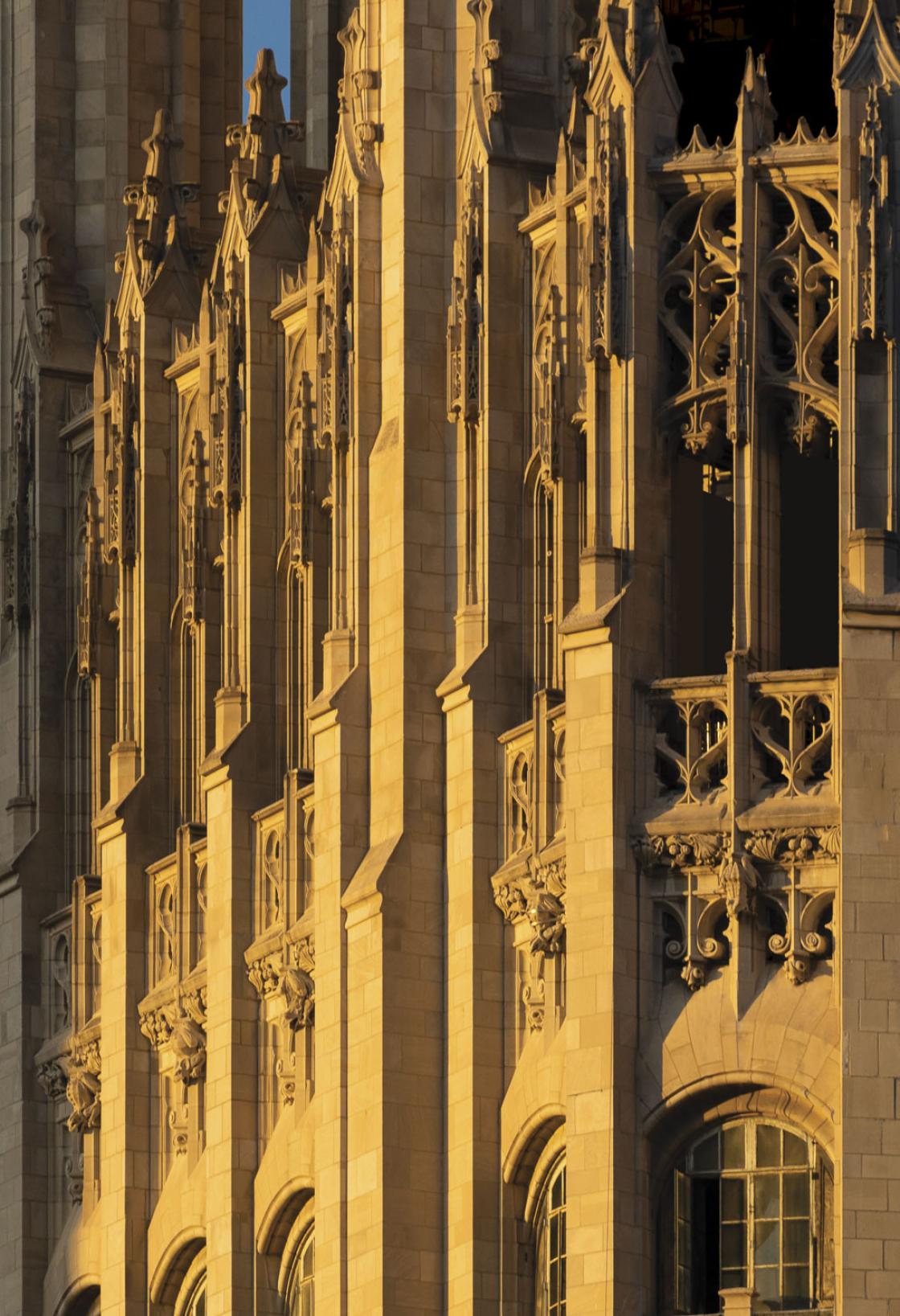
Detail, Chicago Tribune Tower, Raymond Hood, Chicago, Illinois, 1923-1925. Courtesy Brown University.
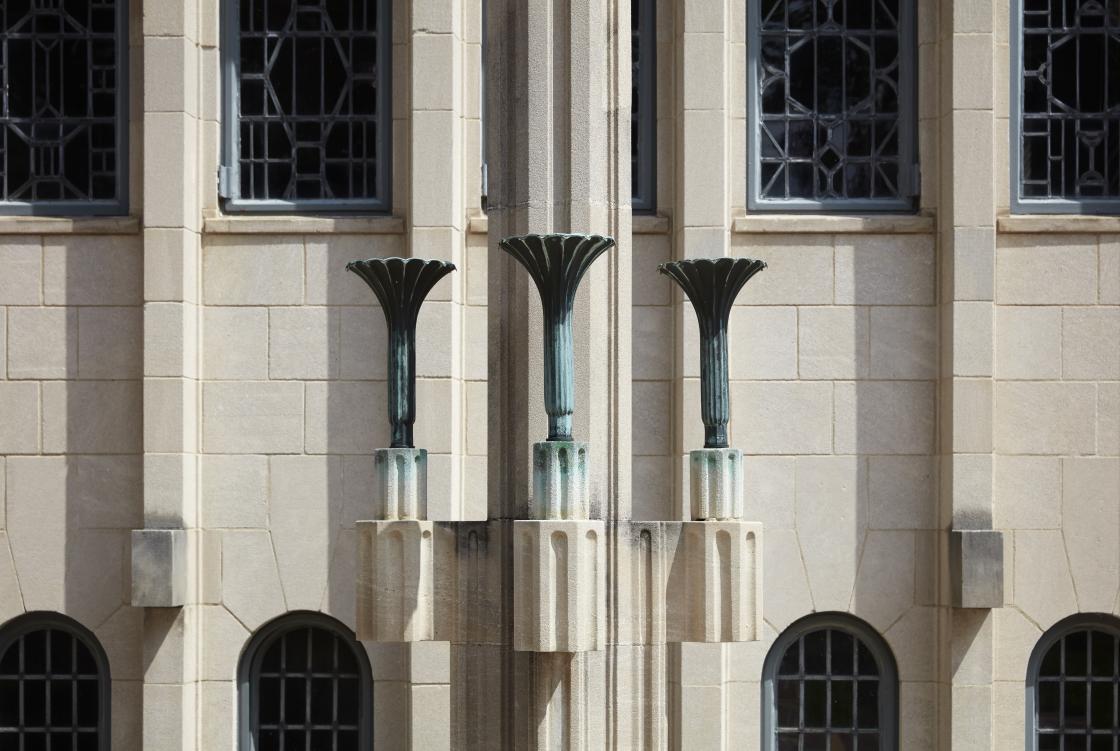
Fountain, Cranbrook School for Boys Dining Hall, Eliel Saarinen, Bloomfield Hills, Michigan, 1928. Photograph by James Haefner, Cranbrook Center for Collections and Research.
Week 1: Interior, Husova 58, Brummel House, Adolf Loos, Pilsen, Czechia, 1928-1929. Courtesy Iconic Houses Network.
Week 2: Cycloid vault, Kimbell Art Museum, Louis I. Kahn, Fort Worth, TX, 1966–1972. Courtesy Kimbell Art Museum.
Week 3: Detail of entrance, Carson, Pirie, Scott and Company, Louis Sullivan, Chicago, Illinois, 1899. Courtesy of Picnic at the Cathedral blog.
Week 4: Central stair hall, Philadelphia Museum of Art, Horace Trumbauer and Zantzinger, Borie and Medary, Philadelphia, Pennsylvania, 1919-1928, Photo by R. Kennedy for Visit Philadelphia.
Week 5: Nimitz House (1900) beneath the San Francisco–Oakland Bay Bridge (2002-2013) with housing complex (circa 2010s) behind, Yerba Buena Island, San Francisco, California. Courtesy Beth LaBerge/KQED.
Kevin Adkisson, December 2024; Photography by Ayako Aratani, CAA Studio Manager, Industrial Design; Courtesy Cranbrook Center for Collections and Research.
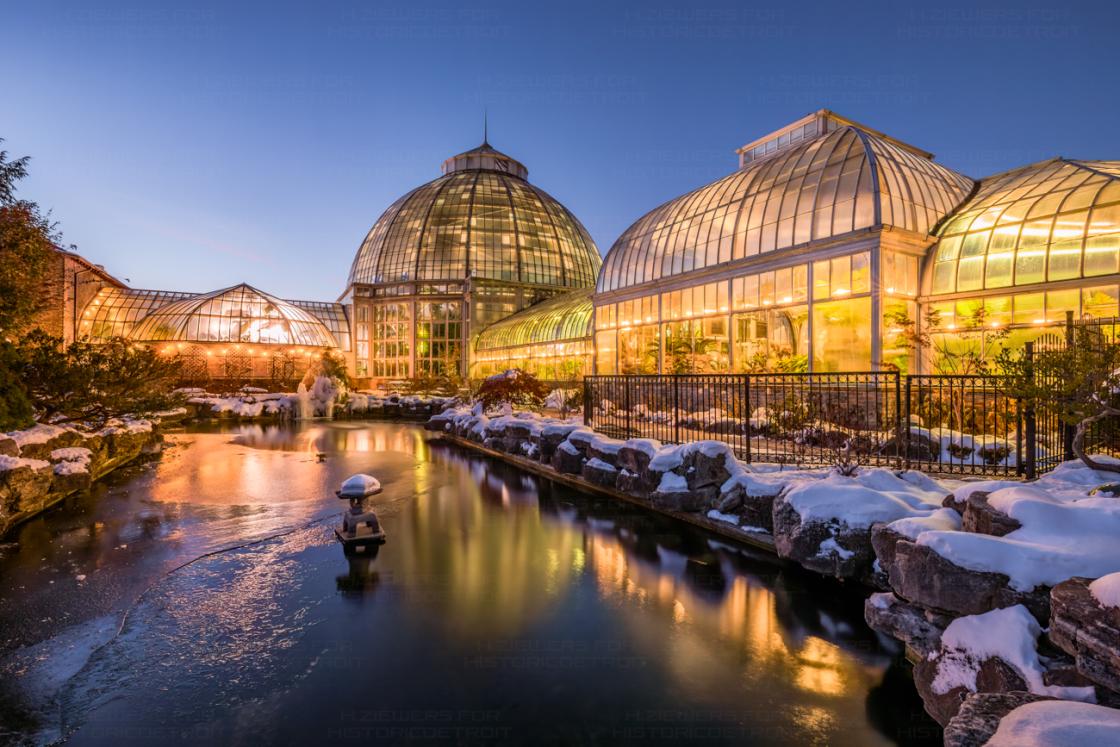
Anna Whitcombe Scripps Conservatory, Albert Kahn and George Mason, Belle Isle, Detroit, Michigan, 1902. Photograph copyright Helmut Ziewers, HistoricDetroit.com.
Beauty Arch at Cranbrook School, “A Life Without Beauty is Only Half Lived” attributed to George Gough Booth. Cranbrook School for Boys, Eliel Saarinen, Bloomfield Hills, Michigan, 1926-1928. Cranbrook Archives, Cranbrook Center for Collections and Research.